


FAQs About Salt for Horses & Horse Licking Salt Blocks
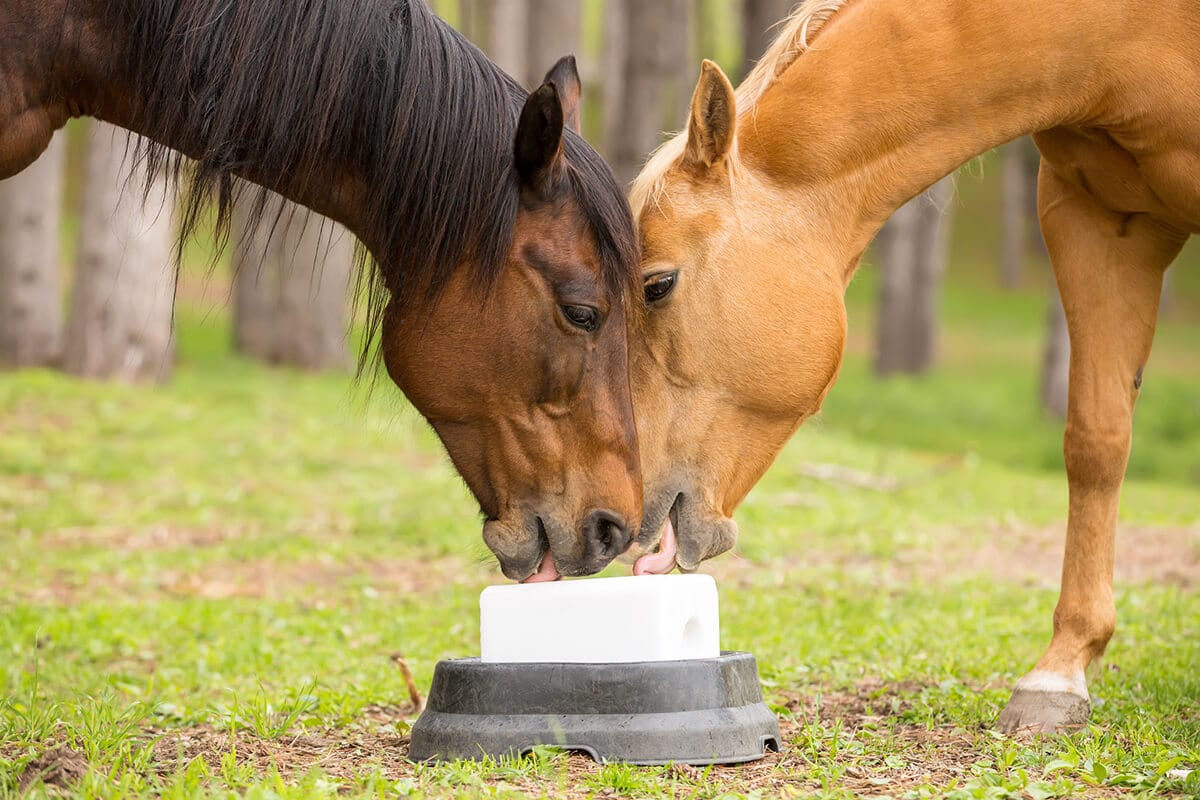

Salt is an essential mineral for horses, vital for their health, hydration, and overall performance. However, many horse owners have questions about how to properly use salt products like salt blocks, loose salt, or specialized mineral salts. Here are the most common questions and expert answers about salt and horses.
Table of Contents
Why do horses lick salt blocks?
Horses lick salt blocks to meet their natural sodium needs. Salt helps regulate fluid balance, nerve function, and muscle contraction. A horse licking a salt block is normal behavior that ensures they get enough minerals.
Do horses need salt blocks?
Yes, horses and salt licks go hand in hand. Salt blocks provide free-choice salt for horses, allowing them to consume salt as needed. Do horses need salt blocks? Absolutely — they help maintain electrolyte balance and prevent salt deficiency in horses.
How much salt does a horse need per day?
The amount varies, but generally, horses require about 10 to 30 grams of salt daily. Factors include activity level, diet, and weather. Knowing how much salt to feed a horse daily is important to avoid both deficiency and excess.
Can horses eat iodized salt?
Yes, horses can have iodized salt, but in moderation. Iodine is an essential nutrient, but too much can be harmful. It’s usually best to use plain white salt or equine-specific mineral salts designed for horses.
Are salt blocks good for horses?
Yes! Are salt blocks good for horses? They are an excellent way to supply essential minerals. They also encourage natural licking behavior, which can improve hydration and prevent muscle cramps.
Can horses drink salt water?
Can horses drink salt water? No, salt water is unsafe for horses as it can cause dehydration and kidney problems. Always provide fresh, clean water.
What is the best salt block for horses?
The best salt block depends on your horse’s needs. Plain white salt blocks are usually sufficient, but in areas where forage is low in trace minerals, mineralized salt blocks can be beneficial. Always ensure the product is safe and specifically formulated for equine use.
Why do horses need salt licks?
Salt licks offer vital minerals that may be lacking in forage or feed. They help with hydration, digestion, and muscle function. Plus, why do horses like salt licks? Because it naturally fulfills their mineral cravings.
How to feed loose salt to horses?
You can add loose salt for horses to their feed in controlled amounts or offer it free choice in a loose salt feeder for horses. Make sure the salt is safe and designed for equine consumption.
What are the symptoms of salt deficiency in horses?
Signs include increased water intake, poor appetite, weight loss, lethargy, and muscle issues. If you notice these, consider supplementing with a salt block for horses or consulting a vet.
Can horses have garlic salt blocks?
Garlic salt blocks formulated for horses are available and often marketed for their potential insect-repelling properties. However, scientific evidence is limited, so they should be used with caution and only in moderation.
Discover our Rock Salt and Vacuum Salt for Animal Feed, specially formulated to meet your horses’ nutritional needs.
Can a horse have too much salt?
While rare, can a horse lick too much salt? excessive licking can lead to salt toxicity or dehydration if horses don’t have enough fresh water. Always monitor your horse’s intake and provide unlimited access to clean water.
Conclusion
Salt is a critical nutrient for horses, and products like salt blocks, loose salt, and mineral-enriched salts provide an easy way to maintain their health. Understanding why horses need salt, how much to feed, and the best types to use ensures your horse stays happy and healthy.
Always consult with a veterinarian or equine nutrition specialist before making changes to your horse’s diet.