
Best Rock Salt for Ice: Types, Grades and How to Choose
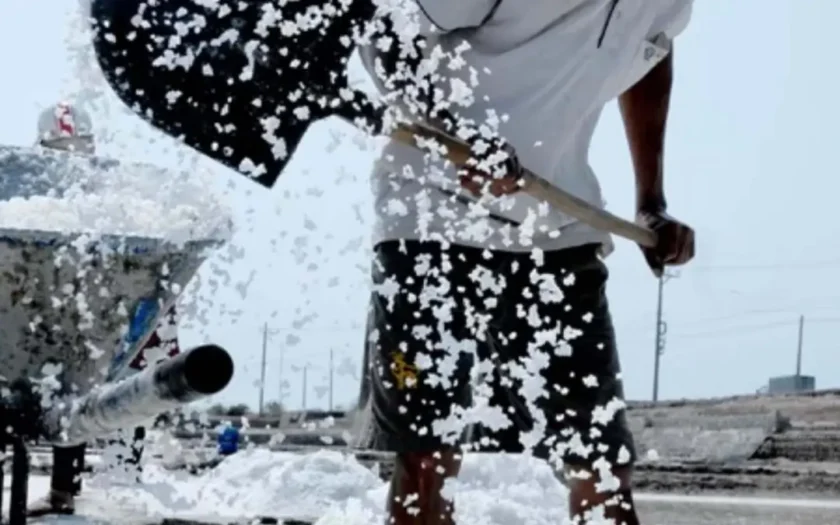
Rock salt is one of the most widely used materials for de-icing roads, pavements and outdoor surfaces during winter. Also known as halite, rock salt is the naturally occurring mineral form of sodium chloride (NaCl).
When rock salt comes into contact with ice and moisture, it dissolves to form a brine solution. Because this brine has a lower freezing point than water, it helps break the bond between ice and the underlying surface and accelerates melting.
However, not all rock salt performs in exactly the same way. The best rock salt for ice depends on several factors, including the temperature, grain size, surface being treated and the scale of the application.
Table of Contents
What Makes Rock Salt Effective for Ice Melting?
The performance of rock salt for ice melting is mainly influenced by three factors: purity, grain size and working temperature.
Sodium chloride rock salt remains one of the most economical de-icing solutions available. Under standard winter conditions, it provides a practical and cost-effective option for roads, highways and large outdoor areas. However, its effectiveness decreases significantly at temperatures below approximately -9°C (15°F).
Purity also plays an important role. Rock salt with a higher sodium chloride content generally dissolves more consistently, while excessive impurities can slow the melting process.
Grain size affects how the salt interacts with the ice. Coarser grains can provide useful traction and continue dissolving over time, while finer grains dissolve more quickly and can provide faster melting when applied correctly.
For large-scale winter maintenance, choosing the appropriate grade and grain size is essential for achieving reliable de-icing performance while maintaining cost efficiency.
Types of Rock Salt for Ice and De-icing
1. Coarse Rock Salt (Road Salt)
Coarse rock salt is the standard choice for road de-icing and large-scale winter maintenance. It is typically mined from underground salt deposits, minimally processed and distributed in large quantities.
Because of its relatively low cost and suitability for high-volume applications, coarse rock salt is widely used for treating roads, highways and extensive outdoor surfaces.
Best for: Roads, highways, car parks and large outdoor areas.
Working temperature: Effective down to approximately -9°C (15°F).
2. Fine Rock Salt
Fine rock salt has a smaller grain size, allowing it to dissolve more rapidly when it comes into contact with moisture and ice. It is also convenient for manual spreading and applications where a faster initial melting response is required.
It is commonly used for smaller areas such as pavements, steps, pedestrian zones and private driveways.
Best for: Pavements, pedestrian areas, steps and driveways.
Working temperature: Approximately -9°C (15°F), similar to standard coarse rock salt.
3. White De-icing Salt
White de-icing salt is a higher-purity form of rock salt that has been washed or further processed to reduce surface impurities.
The cleaner appearance and lower residue can make it a suitable choice for applications where cleanliness and presentation are particularly important.
Best for: Airports, commercial premises and indoor car parks.
Working temperature: Effective down to approximately -9°C (15°F).
4. Treated Rock Salt (Pre-wetted Salt)
Treated or pre-wetted rock salt is conventional rock salt that has been combined with brine or a liquid de-icing agent such as magnesium chloride before application.
Pre-wetting helps the salt begin working more quickly and improves its ability to remain on the treated surface. It can also reduce bouncing and scattering during application, potentially allowing less product to be used per square metre.
This makes treated rock salt particularly useful for pre-treatment before snowfall or frost and for large-scale road maintenance operations.
Best for: Road authorities, highway maintenance and pre-treatment before snowfall.
Working temperature: Can be effective down to approximately -15°C (5°F), depending on the liquid additive used.
How to Choose the Best Rock Salt for Ice
Choosing the right rock salt depends primarily on the application, environmental conditions and required performance.
For Roads and Highways
For large-scale road and highway de-icing, coarse bulk rock salt is generally the most economical option. Its availability in bulk quantities makes it suitable for municipalities, road authorities and industrial buyers that need to maintain a consistent supply throughout the winter season.
Buying directly from a reliable bulk supplier can also help ensure continuity of supply during periods of high seasonal demand.
For Sensitive or High-Traffic Areas
For concrete, tarmac, commercial premises and areas with significant pedestrian traffic, white or washed rock salt may be preferred because it contains fewer visible impurities and can leave less residue.
However, repeated use of sodium chloride can still contribute to surface deterioration, particularly on concrete, so application rates and site conditions should always be considered.
For Pre-Treatment
When preparing roads and outdoor surfaces before frost or snowfall, treated or pre-wetted salt can provide a faster initial response.
Because the salt is already combined with a liquid de-icing agent, it can begin working more quickly and is less likely to bounce or scatter during spreading.
For Extreme Cold
When temperatures fall significantly below -9°C (15°F), standard rock salt becomes considerably less effective.
In these conditions, alternatives such as calcium chloride can provide better low-temperature performance. Calcium chloride can continue melting ice at temperatures down to approximately -20°F, although it generally comes at a higher cost and may have a greater impact on vegetation.
For standard winter conditions and large-volume applications, however, rock salt remains a preferred option because of its strong balance between performance, availability and cost.
Rock Salt vs Ice Melt: Which Is Better?
The choice between rock salt and other ice melt products depends on the application and operating temperature.
Rock salt is generally less expensive per bag or tonne, making it particularly attractive for large-scale road, industrial and municipal de-icing.
Many ice melt products contain calcium chloride, magnesium chloride or other de-icing compounds. These products can perform more effectively at lower temperatures, but they typically cost more per tonne than conventional sodium chloride rock salt.
For industrial and municipal buyers dealing with large areas, rock salt remains a standard and economical choice for volume de-icing. Ice melt alternatives may be more appropriate when low-temperature performance or specific surface considerations are more important than cost.
Bulk Rock Salt Supply for Ice and De-icing
For industrial, municipal and road maintenance applications, the quality and consistency of the salt supply are just as important as the purchase price.
MaxiSalt supplies bulk rock salt for ice and de-icing applications in big bags and loose bulk shipments, with delivery across Europe and worldwide.
Our rock salt is supplied according to the quality requirements needed for road de-icing and industrial applications, providing a practical solution for buyers looking for reliable quantities for winter maintenance operations.
Frequently Asked Questions
What is the best rock salt for ice melting?
For most standard applications, coarse or fine rock salt with a high sodium chloride content provides an effective and cost-efficient solution for ice melting and de-icing.
For temperatures below approximately -9°C (15°F), treated or pre-wetted salt and alternatives such as calcium chloride may provide better performance.
How does rock salt melt ice?
Rock salt dissolves in the moisture present on the ice and forms a brine solution. Because brine has a lower freezing point than plain water, it helps prevent refreezing and weakens the bond between the ice and the underlying surface.
As the brine spreads beneath the ice, it accelerates the melting process and makes the ice easier to remove.
What temperature does rock salt stop working?
Standard rock salt becomes significantly less effective at approximately -9°C (15°F).
Below this temperature, alternative de-icing products such as calcium chloride or magnesium chloride generally provide better low-temperature performance.
Is rock salt safe for concrete?
Rock salt can contribute to surface deterioration when used repeatedly on concrete, particularly under certain freeze-thaw conditions.
For applications where surface appearance and cleanliness are important, white or washed rock salt may be preferred. Depending on the conditions, alternatives such as magnesium chloride can also be considered.
How much rock salt do I need per square metre?
As a general guideline, approximately 20–30 grams of rock salt per square metre can be sufficient for preventive treatment.
For reactive de-icing following snowfall, application rates of around 30–50 grams per square metre are typical, although the appropriate quantity depends on weather conditions, ice thickness and the condition of the surface being treated.
Contact Us for Salt supply
Contact Us to Request a quote