
Does Salt Melt Ice? A Complete Guide to De-Icing Salt and How to Choose the Right Product
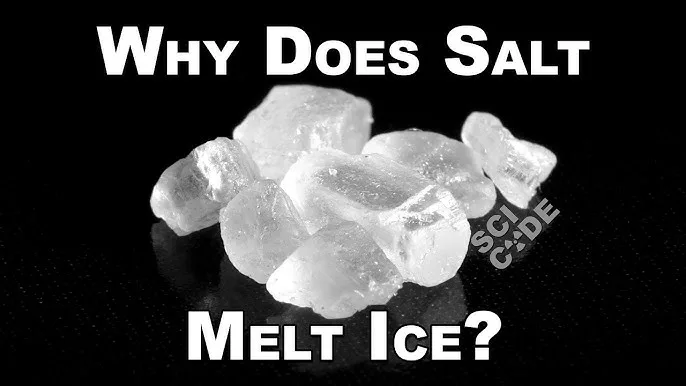
When winter temperatures fall and ice begins to form on roads, driveways and walkways, one of the most common questions is: does salt melt ice?
Yes. Salt can help melt ice by lowering the freezing point of water. However, its effectiveness depends on the type of salt, temperature, application method and condition of the surface.
Rock salt and other sodium chloride products remain among the most widely used materials for winter de-icing because they are readily available, practical and cost-effective for large-scale applications. Sea salt can also be used for de-icing when it meets the appropriate specifications for the intended application.
In this guide, we’ll explain how salt melts ice, which types of salt can be used for de-icing, when to apply salt and how to choose the right bulk de-icing salt for commercial and industrial applications.
Table of Contents
How Does Salt Melt Ice?
Salt does not melt ice simply because it is warm or because it reacts chemically with the ice.
When salt comes into contact with a thin layer of liquid water on the surface of ice, it dissolves and forms a brine solution. This solution has a lower freezing point than pure water.
As a result, the ice can begin to melt even when the surrounding temperature is below 0°C (32°F).
The effectiveness of sodium chloride decreases as temperatures fall. Under typical conditions, standard rock salt becomes considerably less effective around -9°C (15°F) and below.
This is why selecting the appropriate de-icing product is particularly important during severe winter conditions.
What Type of Salt Is Best for Melting Ice?
Different salt products can be used for winter maintenance, but they are not necessarily interchangeable.
Rock Salt
Rock salt, primarily composed of sodium chloride, is one of the most common materials used for road and surface de-icing.
Its relatively low cost makes it particularly suitable for:
- Roads and highways
- Parking areas
- Commercial properties
- Driveways
- Large outdoor surfaces
- Municipal winter maintenance
Coarser crystals can also provide additional traction while gradually dissolving.
Sea Salt for De-Icing
Sea salt is produced through the evaporation of seawater and can also be used for de-icing applications when it meets the required specifications.
The main consideration is not simply whether salt comes from the sea or a mine, but whether the product is suitable for the intended de-icing application in terms of composition, grain size, moisture and quality.
For large-scale winter maintenance, buyers should evaluate the product specifications and total delivered cost rather than assuming that one source of sodium chloride is automatically more effective than another.
Is Sea Salt Better Than Rock Salt for Ice?
Sea salt and rock salt are both primarily sodium chloride, so their basic ice-melting mechanism is the same.
The performance of a particular product depends on factors such as:
- Sodium chloride content
- Grain size
- Moisture
- Impurities
- Application rate
- Surface conditions
- Temperature
Sea salt can be an effective de-icing material when properly produced and specified for the application.
However, claims that sea salt is inherently faster, safer for plants or significantly less corrosive than rock salt should be evaluated carefully. Sodium chloride, regardless of whether it originates from seawater or underground deposits, can contribute to corrosion and environmental impacts when applied excessively.
For professional buyers, product specifications and application requirements are more important than simply choosing between “sea salt” and “rock salt.”
Will Pool Salt Melt Ice?
Yes, pool salt can melt ice because swimming pool salt is generally sodium chloride.
However, pool salt is formulated and marketed for swimming pool applications, not necessarily for winter de-icing.
Using a dedicated de-icing salt or road salt is generally more practical for roads, walkways, parking areas and other winter maintenance applications because these products are supplied specifically for that purpose and may offer more appropriate grain sizes and packaging.
Does Water Softener Salt Melt Ice?
Yes. Water softener salt can melt ice because it commonly contains sodium chloride.
However, water softener salt is designed for regeneration in water softening systems rather than winter surface treatment.
Using dedicated de-icing salt is usually the better choice for roads, driveways and outdoor surfaces because it is specifically supplied for this application.
Will Epsom Salt Melt Ice?
Epsom salt is magnesium sulfate, not sodium chloride.
It can lower the freezing point of water and may have some ice-melting capability, but it is generally not an economical choice for large-scale winter de-icing.
For roads, parking areas and commercial surfaces, sodium chloride-based de-icing salt is generally much more practical and cost-effective.
When Should You Apply Salt: Before or After Snow?
The timing of salt application can significantly affect its performance.
Applying Salt Before Snowfall
Applying salt before a snowfall is known as anti-icing.
The objective is to prevent snow and ice from strongly bonding to the pavement, making subsequent snow removal easier.
Pre-treatment can be particularly useful when a winter storm is expected, but the timing and application rate should be adjusted according to weather forecasts, pavement conditions and local winter-maintenance practices.
Applying Salt After Snowfall
Salt can also be applied after snow has accumulated and been mechanically removed.
For best results, remove as much snow as practical first and then apply the appropriate amount of de-icing salt to the remaining ice or compacted snow.
Salt works through moisture, so its performance can be affected when surfaces are extremely cold or very dry.
At What Temperature Does Salt Stop Working?
Standard sodium chloride road salt becomes progressively less effective as temperatures fall.
A commonly cited practical limit is approximately -9°C (15°F). Below this temperature, melting becomes increasingly slow and other de-icing materials may be more effective.
For very low temperatures, products containing calcium chloride or magnesium chloride may provide better low-temperature performance, although they generally cost more and have their own environmental and corrosion considerations.
For this reason, winter maintenance operators should select de-icing materials according to the expected temperature range rather than relying on one product for every weather condition.
How Much Salt Should You Use for Ice?
There is no single application rate that works for every surface or weather condition.
The appropriate amount depends on:
- Surface temperature
- Air temperature
- Amount of ice or snow
- Moisture conditions
- Type and grain size of the salt
- Traffic levels
- Whether the application is preventive or reactive
Using more salt does not necessarily mean faster or better results. Excessive application can increase costs and contribute to corrosion and environmental impacts.
Professional operators should follow local winter-maintenance guidelines and the supplier’s recommended application rates.
Is De-Icing Salt Environmentally Friendly?
Salt is an effective and economical de-icing material, but it should not be described as completely environmentally harmless.
When excessive quantities of sodium chloride enter soil and waterways through runoff, they can affect vegetation, freshwater ecosystems and soil chemistry. Salt can also contribute to corrosion of vehicles, metal infrastructure and concrete under certain conditions.
The most effective way to reduce these impacts is proper application.
Using the correct product and applying only the amount required for the conditions can reduce unnecessary salt use while maintaining effective winter safety.
Bulk De-Icing Salt for Industrial and Commercial Applications
For municipalities, road-maintenance contractors, distributors and commercial property operators, reliable access to de-icing salt is essential during the winter season.
Canada Salt Group Ltd supplies salt products for commercial and industrial applications, with bulk and bagged options available according to customer requirements.
Our de-icing salt supply can be provided in formats suitable for different handling and distribution requirements, including:
- Bulk shipments
- Jumbo bags
- 25 kg bags
- Custom packaging options
We work with buyers to provide salt according to required specifications, quantities, packaging and destination.
Why Choose Moses Salt?
- Consistent product quality for commercial and industrial applications
- Bulk supply capabilities for large-volume buyers
- Flexible packaging options according to customer requirements
- International supply for qualified export destinations
- Product specifications and quality documentation available according to the supplied product
Whether you require salt for roads, parking areas, industrial sites or distribution, our team can help identify the appropriate product and supply format for your application.
Frequently Asked Questions
Does salt really melt ice?
Yes. Salt dissolves in the thin layer of water present on ice and forms a brine solution with a lower freezing point than pure water. This encourages melting as long as the temperature remains within the effective operating range of the salt.
What salt is best for melting ice?
For most standard winter de-icing applications, sodium chloride-based rock salt or de-icing salt provides a practical and economical solution. The best product depends on temperature, surface conditions and application requirements.
Does sea salt melt ice?
Yes. Sea salt contains sodium chloride and can melt ice when used under suitable conditions. Its effectiveness depends on the product’s composition, grain size and temperature rather than simply its marine origin.
Does pool salt melt ice?
Yes, because pool salt is generally sodium chloride. However, dedicated de-icing salt is usually a more appropriate and economical choice for winter maintenance.
Does water softener salt melt ice?
Yes. Sodium chloride-based water softener salt can help melt ice, but it is designed for water softening rather than surface de-icing. Dedicated road or de-icing salt is generally preferable for winter applications.
What temperature does rock salt stop working?
Rock salt becomes progressively less effective as temperatures decrease and is commonly considered to have a practical limit of around -9°C (15°F). At lower temperatures, alternative de-icers may perform better.
Is it better to put salt down before or after snow?
Salt can be used both before and after snowfall. Pre-treatment can help prevent ice and snow from bonding strongly to surfaces, while post-treatment can help melt remaining ice after snow has been removed.
Can too much salt damage roads and plants?
Yes. Excessive sodium chloride can contribute to corrosion and may negatively affect vegetation, soil and freshwater ecosystems. Applying the appropriate amount for the conditions is therefore important.
Request a quote
Contact Us to Request a quote