
Calcium Chloride (CaCl₂): Properties, Uses and De-Icing Applications
When winter temperatures become extremely low, traditional road salt may no longer provide the level of de-icing performance required. Sodium chloride is a widely used and cost-effective de-icer, but its effectiveness decreases as temperatures fall. In these conditions, an alternative such as calcium chloride (CaCl₂) can provide a more effective solution.
Calcium chloride is one of the most widely used non-sodium de-icing materials. Its ability to absorb moisture and release heat as it dissolves makes it particularly useful for melting ice and preventing ice formation in cold weather.
But de-icing is only one of the many applications of calcium chloride. This versatile chemical compound is also used in road dust control, concrete production, food processing, oil and gas operations, water treatment and a variety of other industrial and commercial applications.
Table of Contents
What Is Calcium Chloride (CaCl₂)?
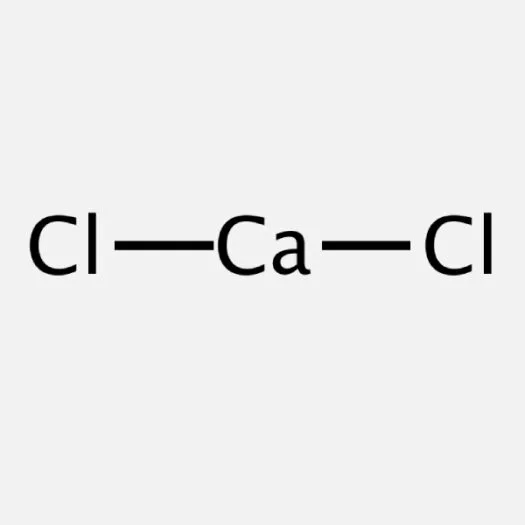
Calcium chloride (CaCl₂) is an ionic compound made up of calcium and chlorine. It is commonly produced from limestone and can also be obtained as a by-product of the Solvay process, an industrial process used to manufacture sodium carbonate, also known as soda ash.
Sodium carbonate is an important industrial material used in applications including glass manufacturing, detergents and other products. Calcium chloride, produced as a by-product of this process, also has a wide range of useful properties and applications.
One of the most important characteristics of calcium chloride is its high solubility in water and its ability to absorb moisture from the surrounding environment.
Is Calcium Chloride Hygroscopic?
Yes. Calcium chloride is hygroscopic, meaning that it readily absorbs moisture from the air.
When exposed to sufficient moisture, solid calcium chloride can absorb water and eventually dissolve or liquefy. This property is particularly important in many of its commercial applications, including de-icing and moisture control.
It is worth distinguishing between the terms hygroscopic and hydroscopic.
Hygroscopic describes a material that absorbs moisture from the surrounding environment. Hydroscopic, on the other hand, refers to an optical instrument used to observe objects beneath the surface of water.
Because calcium chloride is highly hygroscopic, solid CaCl₂ should be stored in a tightly sealed container to protect it from moisture and maintain its condition during storage.
What Forms Does Calcium Chloride Come In?
Calcium chloride is commercially available in several forms, depending on the intended application. These can include:
- Calcium chloride pellets
- Calcium chloride flakes
- Calcium chloride powder
- Calcium chloride solutions
The appropriate form depends on factors such as the application, required concentration and method of distribution.
Although calcium chloride has relatively low toxicity and is generally considered safe when handled appropriately, concentrated forms can cause irritation or harm. Appropriate personal protective equipment, such as gloves, protective clothing, safety goggles and suitable respiratory protection, should be used when required by the product’s safety instructions.
How Does Calcium Chloride Work as a De-Icer?
One of the most important applications of calcium chloride is ice and snow removal.
Its effectiveness as a de-icer is closely related to its hygroscopic properties and its behaviour when dissolved in water.
When calcium chloride comes into contact with ice or moisture, it dissolves rapidly and forms a calcium chloride brine. The dissolution process releases heat, while the resulting brine has a lower freezing point than pure water.
This combination helps calcium chloride:
- Melt existing ice.
- Lower the freezing point of water.
- Reduce the risk of new ice formation.
- Continue working at lower temperatures than conventional sodium chloride.
For this reason, calcium chloride can be particularly useful when winter conditions become too cold for conventional road salt to perform effectively.
Calcium Chloride vs. Sodium Chloride for De-Icing
The main advantage of calcium chloride as a de-icer is its performance at lower temperatures.
Sodium chloride (NaCl) is widely used for winter road maintenance because it is relatively inexpensive and effective under suitable conditions. However, its effectiveness decreases significantly as temperatures fall.
Calcium chloride can remain effective at much lower temperatures. Depending on the formulation, concentration and application conditions, calcium chloride products may be used in extremely cold conditions.
The original source describes calcium chloride as being effective in solid form to approximately −32°C and in liquid form to approximately −52°C.
Actual performance can vary depending on factors such as concentration, surface temperature, weather conditions and application rate.
How Is Calcium Chloride Applied for Ice Control?
Calcium chloride can be applied in different forms depending on the requirements of the site.
It can be:
- Spread in solid form
- Applied as flakes or pellets
- Sprayed as a liquid solution
- Used in brine-based de-icing applications
Liquid calcium chloride can be particularly useful for preventive ice control, while solid products can be used to treat existing snow and ice.
The correct application method and rate depend on the weather conditions and the surface being treated.
Other Uses of Calcium Chloride
Calcium chloride is not limited to winter maintenance. Its ability to absorb moisture and its chemical properties make it useful across numerous industries.
Dust Control
Calcium chloride is used for dust control on roads and unpaved tracks, particularly in applications where reducing airborne dust is important.
Its hygroscopic nature allows it to attract and retain moisture, helping maintain surface moisture and reduce dust.
Concrete Production
Calcium chloride has applications in concrete production, where it can accelerate the setting and drying process under certain conditions.
Its use in concrete, however, needs to be carefully considered because compatibility and application requirements depend on the specific concrete formulation and project conditions.
Laboratory and Drying Applications
Because calcium chloride readily absorbs moisture, it is also used as a drying agent in laboratory and industrial processes where moisture needs to be controlled or removed.
Oil and Gas Industry
Calcium chloride is used in various oil and gas applications, including drilling and related industrial processes.
Its chemical and moisture-absorbing properties make it useful in specific operations where calcium chloride solutions or solid products are required.
Manufacturing and Industrial Applications
Calcium chloride is also used in the manufacture of certain products, including plastics and other calcium-based materials.
Its versatility makes it a valuable chemical raw material across several industrial sectors.
Calcium Chloride in Swimming Pools
Calcium chloride can be used in swimming pool applications as a source of calcium.
Maintaining appropriate calcium levels can be an important part of pool water management, depending on the pool system and water chemistry requirements.
Calcium Chloride in Fire Extinguishers and Fabric Softeners
Calcium chloride is also found in a variety of everyday and commercial applications, including certain fire extinguisher formulations and fabric softening products.
Its use in these products depends on the specific formulation and intended function.
Calcium Chloride in Agriculture and Farm Equipment
One unusual application of calcium chloride is in agricultural and farm equipment.
In some cases, calcium chloride solutions are used as tyre ballast. Filling tyres with a suitable solution can add weight to agricultural machinery, improving stability and traction while also providing resistance to freezing.
Calcium Chloride in Food Production
Calcium chloride also has a number of applications in the food industry.
It can be used as a:
- Stabiliser
- Preservative
- Firming agent
- Flavour-related processing ingredient
- Source of calcium
For example, calcium chloride may be used in products such as pickles to help maintain texture.
It is also used in cheese production and brewing, as well as in certain beverages and other food-processing applications.
Calcium Chloride and Fruit Protection
Calcium chloride can also be used in agriculture to provide calcium to fruit crops.
For example, calcium chloride solutions may be applied to apple trees to help address calcium-related fruit disorders such as cork spot and bitter pit.
The application method and concentration depend on the crop, growing conditions and agricultural recommendations.
Calcium Chloride in Molecular Gastronomy
One of the more surprising applications of calcium chloride is in molecular gastronomy, particularly in a technique known as spherification.
In this process, calcium chloride is combined with sodium alginate to create small liquid-filled spheres surrounded by a soft outer membrane.
A flavoured liquid containing sodium alginate can be introduced into a calcium chloride solution. The interaction forms a thin gel-like layer around each droplet, creating spheres that can resemble small pearls or caviar.
This technique is used to create innovative textures and presentations in foods and beverages.
Medical Uses of Calcium Chloride
Calcium chloride also has applications in medicine. In appropriate clinical settings, it can be used as a source of calcium, including in the treatment of hypocalcaemia.
Calcium chloride may also be used in certain emergency medical situations involving specific cardiac complications and other conditions where intravenous calcium administration is clinically indicated.
Medical use should always be determined and administered by qualified healthcare professionals, as calcium chloride is a concentrated medical product with specific indications and administration requirements.
Why Is Calcium Chloride Such a Versatile Chemical?
The wide range of calcium chloride applications comes largely from its combination of useful chemical properties.
Its key characteristics include:
- High water solubility
- Strong hygroscopic properties
- Heat release during dissolution
- Ability to lower the freezing point of water
- Availability in solid and liquid forms
- Versatility across industrial and commercial applications
These properties explain why calcium chloride can be used in everything from winter road maintenance to food processing and industrial manufacturing.
Calcium Chloride for Winter De-Icing
For winter maintenance, calcium chloride is particularly valuable when low temperatures make conventional road salt less effective.
Its ability to rapidly form brine, release heat during dissolution and lower the freezing point of water makes it a powerful option for both ice melting and preventive ice control.
At Moses Export, we understand the importance of selecting the right de-icing material for different winter conditions. Calcium chloride can be an effective solution for applications where lower-temperature performance is required.
If you are looking for calcium chloride for de-icing, industrial applications or other commercial uses, our team can help you identify the appropriate product and application for your requirements.
Frequently Asked Questions About Calcium Chloride
What is calcium chloride (CaCl₂)?
Calcium chloride is an ionic compound consisting of calcium and chlorine. It is highly soluble in water and strongly hygroscopic, making it useful for de-icing, moisture control and many industrial applications.
Is calcium chloride a good de-icer?
Yes. Calcium chloride is an effective de-icing material, particularly in very cold conditions. When it dissolves, it releases heat and forms a brine with a lower freezing point than water, helping melt ice and prevent refreezing.
What temperature does calcium chloride work at?
The effective temperature range depends on the product, concentration and application conditions. The source material describes calcium chloride as effective to approximately −32°C in solid form and −52°C in liquid form.
What is the difference between calcium chloride and road salt?
Road salt commonly refers to sodium chloride (NaCl), while calcium chloride (CaCl₂) is a different chemical compound. Calcium chloride can provide effective de-icing performance at lower temperatures than sodium chloride.
Is calcium chloride hygroscopic?
Yes. Calcium chloride is highly hygroscopic, meaning it readily absorbs moisture from the surrounding air. This is one of the properties that makes it useful for de-icing and dust control.
What are the main uses of calcium chloride?
Calcium chloride is used for road de-icing, dust control, concrete applications, drying processes, oil and gas operations, swimming pools, food production, agriculture and various industrial applications.
What forms does calcium chloride come in?
Calcium chloride is available in several forms, including flakes, pellets, powder and liquid solutions. The most suitable form depends on the intended application.
How should calcium chloride be stored?
Because calcium chloride readily absorbs moisture, solid products should be stored in tightly sealed, moisture-resistant containers and handled according to the manufacturer’s safety and storage instructions.
Conclusion
Calcium chloride (CaCl₂) is far more than an alternative to traditional road salt. Its high solubility, hygroscopic nature and ability to release heat when dissolving make it an effective material for low-temperature de-icing and ice prevention.
Beyond winter maintenance, calcium chloride is used in dust control, concrete, food production, agriculture, oil and gas, swimming pools, laboratory processes and many other applications.
For businesses and organisations dealing with severe winter conditions, calcium chloride can be a valuable option when conventional sodium chloride is no longer sufficient.
Request a quote
Contact Us to Request a quote