
Salt and Food Additives: Are They Always Necessary?
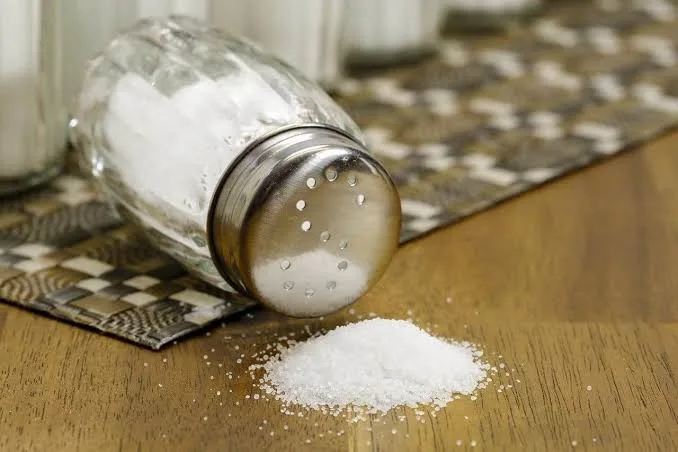
Demand for additive-free food products continues to grow. Organic products are becoming increasingly popular, and more food manufacturers are looking to expand their additive-free product ranges. But is it possible to manufacture food products on a large scale without relying on additives?
The answer is yes. By choosing the right alternatives, manufacturers can maintain efficient production while reducing the need for certain additives. One example is salt without anti-caking agents, which can help food producers meet changing market demands without sacrificing the benefits of large-scale manufacturing.
Table of Contents
Anti-Caking Agents in Salt: Understanding E535 and E536
Anti-caking agents, including E535 and E536, are commonly used in conventional table salt to prevent clumping. These additives help salt remain free-flowing, supporting easier handling, storage and use during food production.
However, manufacturers looking to develop products with fewer additives may want to explore alternatives that deliver the required salt quality without relying on anti-caking agents.
To support more natural, additive-free production processes, moses has invested in technological innovation. This has made it possible to supply high-quality salt without anti-caking agents, offering food manufacturers an alternative for suitable applications.
Salt Without Additives: An Alternative for Industrial Food Production
Producing salt without anti-caking agents is a practical option for manufacturers seeking to respond to the growing demand for additive-free products.
moses sea salt is designed for industrial applications where salt without anti-caking agents is required. Its suitability is linked to the aligned grain structure of the sea salt and the company’s production process.
With a wide range of salt grain sizes, manufacturers can select an option that fits their specific application. This flexibility makes it possible to explore additive-free formulations while responding to evolving consumer preferences and market trends.
Depending on the production requirements, manufacturers may also be able to simplify their processes by using a single type of salt across multiple applications. This can help make salt selection and handling more straightforward and efficient.
What About Iodine in Salt?
Iodine serves a different purpose from anti-caking agents. Although salt naturally contains only negligible amounts of iodine, it may be added separately to help address public-health needs.
In many countries, iodised salt is used as a public-health measure because insufficient iodine intake is associated with health risks, including thyroid problems. Since salt is widely consumed and used in food products, adding iodine to salt provides a practical way to increase iodine intake across the population.
The rules on iodine fortification vary by country. In Belgium, adding iodine to salt is optional, and consumers can choose between salt with iodine and salt without iodine.
When iodine is added, this must be indicated on the product packaging, allowing consumers to identify the type of salt they are purchasing.
Choosing the Right Salt for Your Product
Reducing additives in food production does not necessarily mean compromising on production efficiency. By selecting the appropriate salt type and grain size, manufacturers can explore alternatives that meet their application requirements and support their product-development goals.
Whether the objective is to produce food with fewer additives or to select salt with or without iodine, understanding the role of each ingredient is an important step towards making the right choice.
Request a quote
Contact Us to Request a quote