
Salt Pellets vs Salt Crystals: Which Is Best for Water Softeners?
Hard water is a common issue in homes, commercial buildings and industrial facilities. Water containing high levels of dissolved minerals, particularly calcium and magnesium, can lead to limescale deposits, affect plumbing systems and reduce the effectiveness of soaps and detergents.
Over time, hard water can cause scale to build up inside pipes and appliances, potentially reducing water flow and affecting the performance and lifespan of water-using equipment.
A water softener helps address these problems by reducing the concentration of hardness minerals in water through an ion-exchange process. Salt is an essential part of many conventional water-softening systems because it is used to regenerate the ion-exchange resin.
Water softener salt is commonly available in different forms, including salt pellets and salt crystals. So, when comparing salt pellets vs salt crystals, which option is better for a water softener?
Table of Contents
What Is the Difference Between Salt Pellets and Salt Crystals?
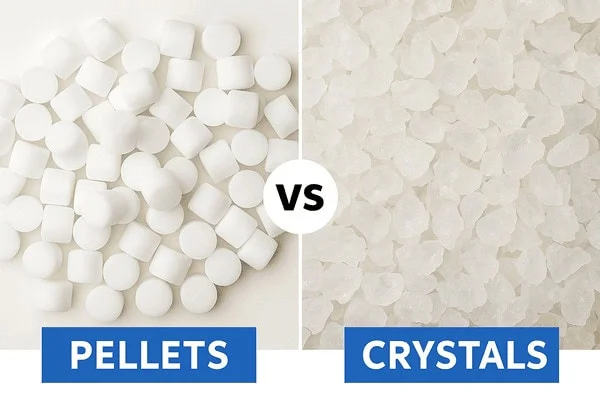
Both salt pellets and salt crystals can be used in compatible water softening systems. The main differences are their physical form, purity, dissolution characteristics and how they behave inside the brine tank.
The best choice depends on the type of water softener you have, your water consumption and the manufacturer’s recommendations.
Solar Salt or Salt Crystals
Solar salt, commonly supplied in crystal form, is produced by evaporating seawater or brine using solar energy.
During the production process, water evaporates from large outdoor ponds, leaving behind salt crystals. Solar salt is widely used for water softening and can offer an economical solution for residential and commercial applications.
Salt crystals can be particularly suitable for water softeners with relatively low to moderate water consumption.
However, crystal salt can sometimes contribute to the formation of a hardened layer or salt bridge inside the brine tank. A salt bridge occurs when the salt forms a hard crust or layer above the remaining salt, preventing the salt from dissolving properly.
When this happens, the water softener may not receive enough brine during regeneration, which can affect its ability to soften water effectively.
Regularly checking the salt level and breaking up any salt bridge can help maintain proper system performance.
Salt Pellets
Salt pellets are compressed salt products manufactured specifically for applications such as water softening. Their uniform shape and size allow them to dissolve relatively consistently in the brine tank.
High-purity salt pellets are designed to minimize insoluble residue and can be a convenient option for water softening systems that require consistent regeneration.
Pellets can also be formulated with additives designed to address specific water-softening requirements. For example, some products contain citric acid or other additives intended to help reduce mineral buildup or support cleaner operation of the softening system.
One of the advantages of using quality salt pellets is their ability to provide a more consistent supply of salt for regeneration while helping reduce the amount of insoluble material left behind in the brine tank.
However, the exact formulation and suitability of a pellet product depend on the manufacturer’s specifications and the requirements of the water softener.
Salt Pellets vs Salt Crystals: Which Is Better?
So, which is better when comparing salt pellets vs salt crystals?
There is no single answer for every water softener. Both forms can work effectively when they meet the requirements of the specific system.
Salt Pellets
Salt pellets may be a good choice when you want:
- Consistent pellet size and dissolution
- High-purity salt for water softening
- Less insoluble residue in the brine tank
- A convenient option for regular regeneration
- A product specifically manufactured for water softener applications
Salt Crystals
Salt crystals may be suitable when you want:
- An economical water softener salt
- Solar salt produced through natural evaporation
- A suitable option for residential systems with moderate water consumption
- A readily available salt format for compatible softeners
The most important consideration is not simply whether the salt comes in pellet or crystal form. Always check the water softener manufacturer’s recommendations before selecting a salt product.
Why Does Salt Form a Bridge in a Water Softener?
A salt bridge is a hardened layer that can form inside the brine tank, creating an empty space between the salt at the top and the salt or brine below.
When a salt bridge forms, the softener may appear to have plenty of salt even though there is insufficient salt available for regeneration.
Several factors can contribute to salt bridging, including humidity, temperature, the type of salt used and how the salt is stored.
Using an appropriate water softener salt and maintaining the brine tank according to the manufacturer’s instructions can help reduce the likelihood of operational problems.
Do Salt Pellets Protect Pipes and Appliances?
The primary purpose of salt in a conventional water softener is to regenerate the ion-exchange resin so the system can continue removing calcium and magnesium ions from the water.
By reducing water hardness, a properly functioning water softener can help reduce the formation of limescale inside pipes, water heaters, dishwashers and other appliances.
Some specialized salt pellets may contain additives intended to help manage mineral buildup. However, the specific benefits depend on the formulation of the product and should be verified against the manufacturer’s specifications.
How Does Salt Work in a Water Softener?
A salt-based water softener generally works through ion exchange.
As hard water passes through the softener, calcium and magnesium ions are captured by the ion-exchange resin. Sodium ions are released in exchange, reducing the concentration of hardness minerals in the treated water.
Once the resin becomes saturated with calcium and magnesium, it needs to be regenerated.
During regeneration, a concentrated salt solution called brine passes through the resin. The sodium in the brine helps remove the accumulated hardness ions from the resin, restoring its ability to soften water.
This is why salt is an important consumable for many conventional water softening systems.
How to Choose the Right Water Softener Salt
When choosing between salt pellets and salt crystals, consider the following:
Check Your Softener Manufacturer’s Requirements
Different water softeners may have specific recommendations regarding salt type and quality. Always follow the manufacturer’s instructions.
Consider Salt Purity
Higher-purity water softener salt generally contains fewer insoluble impurities, which can help reduce residue and maintenance requirements.
Consider Your Water Consumption
Households and facilities with higher water consumption may require more frequent regeneration and therefore a consistent supply of suitable softener salt.
Consider Maintenance
Regardless of the salt format you choose, regularly inspect the brine tank and monitor for salt bridging or excessive residue.
Superior Quality Salt for Water Softeners and Industrial Applications
Choosing the right salt can make a difference in the reliable operation of water softening systems.
moses Salt supplies a wide range of salt products for residential, commercial and industrial applications, including solar salt, salt pellets, bulk road salt, treated salt, food-grade salt and other specialty salt products across North America.
Whether you need water softener salt for a household system or larger quantities for commercial and industrial applications, our team can help you identify the appropriate product and supply option.
Contact moses Salt or call +201000808864 to learn more about our products, delivery and pickup options, or to request a free quote.
Frequently Asked Questions
Are salt pellets better than salt crystals?
Both can be effective in compatible water softeners. Salt pellets are often preferred for their consistent shape and dissolution characteristics, while solar salt crystals can provide an economical option. The best choice depends on your water softener and the manufacturer’s recommendations.
Can I use salt crystals instead of pellets?
In many systems, yes, but compatibility should always be confirmed with the water softener manufacturer. Using the recommended salt type can help maintain proper regeneration and system performance.
What is the best salt for a water softener?
High-purity water softener salt pellets or crystals can both be suitable. For many systems, high-purity pellets are a convenient choice because they are designed specifically for controlled dissolution and can leave less insoluble residue.
What is a salt bridge?
A salt bridge is a hard layer that forms inside the brine tank and prevents salt from dissolving properly. This can interfere with the regeneration process and reduce the effectiveness of the water softener.
Does water softener salt remove calcium from water?
The salt itself does not directly remove calcium. In a conventional water softener, the ion-exchange resin removes calcium and magnesium from the water. Salt brine is then used during regeneration to restore the resin so it can continue operating.
How often should I add salt to my water softener?
The frequency depends on your water consumption, water hardness, softener capacity and regeneration settings. Check the salt level regularly and follow the maintenance instructions provided by your water softener manufacturer.
Request a quote
Contact Us to Request a quote