


Tips for choosing the right salt in the shops
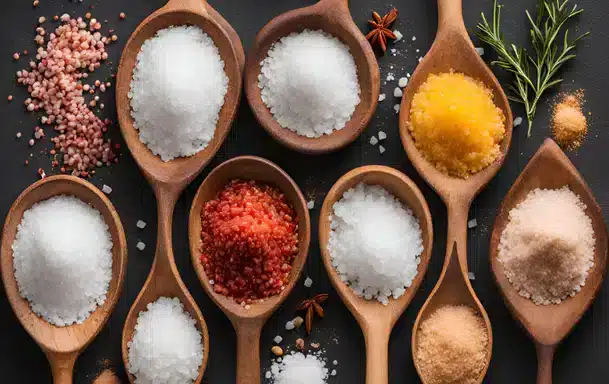

When you stand in front of all the different salts on offer in stores, choosing the right one can be overwhelming. From traditional kitchen salt to gourmet fleur de sel, there are many options. Knowing which salt is best for your kitchen starts with checking the packaging and keeping a few key points in mind.
Table of Contents
Types of Salt You Can Find in Stores
Today, supermarkets and specialty shops offer a wide variety of salts. The most common types include:
- Kitchen salt: Also called mine salt, extracted from underground salt mines. Packaging may label it as “vacuum salt” or “salt from ancient seabeds.”
- Fine sea salt: Natural sea salt with a fine grain, ideal for culinary applications.
- Coarse sea salt: Coarse-grained sea salt, perfect for making salt brine or using in salt mills.
- Grey salt: Unrefined salt with no additives.
- Fleur de sel: 100% natural, hand-harvested sea salt, rich in minerals and free from additives.
- Salt with or without iodine: Kitchen salt may be iodized or non-iodized.
- Specialty salts: Examples include Himalayan salt, black salt, or herb-infused salts for specific dishes.
Note: The term kitchen salt refers to salt suitable for cooking. It must meet purity and moisture standards but doesn’t indicate the type. For example, fine sea salt is also considered kitchen salt.
Sea Salt vs. Vacuum Salt
It’s important to check the packaging carefully. While sea salt and vacuum salt may look similar, their differences are significant:
- Sea salt is harvested naturally from evaporated seawater. It contains essential minerals and trace elements and does not include additives like anti-caking agents. Its balanced mineral composition gives a subtle, natural flavor that enhances any dish.
- Vacuum salt, extracted from underground salt layers, is chemically purified. It is primarily used in industrial and chemical applications, though some is sold for household use.
Excellent Price-Quality Ratio
Many people consider sea salt an exclusive, premium product. However, it doesn’t have to be more expensive than other types of salt. Even with its natural advantages, sea salt is still a very affordable ingredient, especially considering that a salt shaker can last nearly a year.
✅ Tip: For cooking, seasoning, or even gourmet dishes, sea salt offers the perfect combination of quality, taste, and sustainability.